
Many taxpayers believe that as long as tax is not deducted at source (TDS), their banking, spending, and investment activities remain completely private.
In modern India, this is a dangerous misconception.
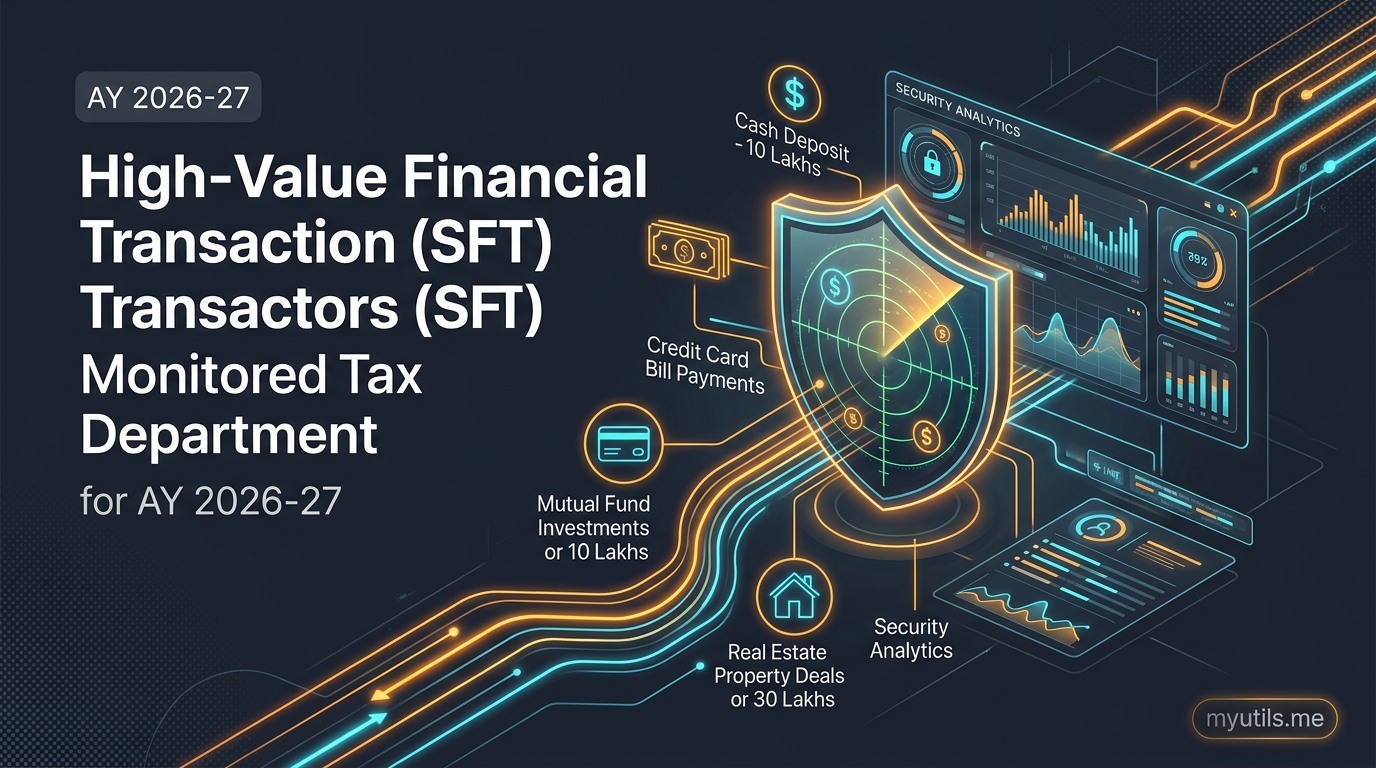
Under Section 285BA of the Income Tax Act, 1961 read with Rule 114E of the Income Tax Rules, banks, mutual fund asset management companies, stock depositories, credit card issuers, and property registrars are legally mandated to report specific high-value transactions directly to the tax department.
These disclosures are reported via the Statement of Financial Transactions (SFT). Once submitted, the department’s data analytics engine (Project Insight) automatically cross-matches your total expenditure and investments against the taxable income reported in your Income Tax Return.
If you earn ₹8 Lakh annually but spend ₹15 Lakh on credit cards or deposit ₹20 Lakh in cash, the system automatically triggers an automated compliance notice.
Here is the definitive guide to every major high-value transaction threshold monitored by the Income Tax Department in Assessment Year 2026-27.

Complete Table of Mandatory SFT Reporting Thresholds
| SFT Code | Transaction Type | Reporting Institution | Statutory Reporting Threshold |
|---|---|---|---|
| SFT-004 | Cash Deposits / Withdrawals in Current Accounts | Banks & Co-operative Banks | Aggregating to ₹50 Lakh or more in a financial year |
| SFT-005 | Cash Deposits in Savings Bank Accounts | Banks, Co-ops & Post Office | Aggregating to ₹10 Lakh or more in a financial year |
| SFT-006 | Time Deposits (Fixed Deposits / Recurring) | Banks, Co-ops, Post Office & NBFCs | Aggregating to ₹10 Lakh or more in a financial year |
| SFT-007 | Credit Card Payments (Cash Mode) | Banking Companies & Card Issuers | Cash payments aggregating to ₹1 Lakh or more |
| SFT-007 | Credit Card Payments (Non-Cash / Online Mode) | Banking Companies & Card Issuers | Total bill payments aggregating to ₹10 Lakh or more |
| SFT-008 | Mutual Fund Scheme Units Purchase | Mutual Fund Asset Management Companies (AMCs) | Aggregating to ₹10 Lakh or more in a financial year |
| SFT-009 | Bonds or Debentures Subscription | Companies or Institutions Issuing Bonds | Aggregating to ₹10 Lakh or more in a financial year |
| SFT-010 | Acquisition of Shares / Public Issues / Buyback | Listed / Unlisted Companies | Aggregating to ₹10 Lakh or more in a financial year |
| SFT-012 | Purchase or Sale of Immovable Property | Sub-Registrar / Stamp Valuation Authorities | Value or Stamp Duty Value of ₹30 Lakh or more |
| SFT-013 | Sale of Foreign Currency / Forex Cards | Authorized Dealers under FEMA | Aggregating to ₹10 Lakh or more in a financial year |

Detailed Breakdown of Key High-Risk Categories
1. Cash Deposits in Bank Accounts (₹10 Lakh / ₹50 Lakh)
The department monitors cash circulation aggressively:
- Savings Accounts: If you deposit ₹10 Lakh or more in physical currency across one or multiple savings accounts in the same bank during a financial year, the bank is legally required to submit an SFT report.
- Current Accounts: The threshold is ₹50 Lakh for cash deposits or cash withdrawals in current accounts.
- Trap to Avoid: Splitting ₹12 Lakh into smaller deposits of ₹1,90,000 across four branches of the same bank does not work. SFT aggregation is keyed directly to your PAN, not your account number.
2. Credit Card Bill Payments (₹1 Lakh Cash / ₹10 Lakh Online)
Credit card spending is one of the most common triggers for mismatch inquiries:
- Cash Payments: If you settle your credit card dues with ₹1 Lakh or more in physical cash, an immediate SFT flag is generated.
- Digital / Bank Transfers: If your total annual credit card bill settlements via NEFT, IMPS, UPI, or auto-debit exceed ₹10 Lakh, the card issuer reports the total amount spent under code
SFT-007. - The Risk: If your filed ITR shows total gross income of ₹7 Lakh, but your credit card spends total ₹14 Lakh, the automated compliance portal will query the source of the excess expenditure under Section 69C (Unexplained Expenditure).
3. Mutual Funds, Stocks, and Fixed Deposits (₹10 Lakh)
- Investing ₹10 Lakh or more into equity mutual funds, debt funds, or corporate fixed deposits triggers automatic reporting.
- Similarly, opening new fixed deposits (excluding renewals of existing FDs) totaling ₹10 Lakh in a single bank is reported under
SFT-006. - The department compares the total capital deployed against your declared disposable income and savings history.
4. Real Estate Transactions (₹30 Lakh)
Whenever a property registration agreement (sale deed, gift deed, or development agreement) is stamped:
- If the agreement consideration or the circle rate (stamp duty value) exceeds ₹30 Lakh, the Sub-Registrar reports both the buyer’s PAN and the seller’s PAN.
- For Buyers: You must be prepared to demonstrate the source of the purchase consideration (e.g. bank home loan sanction letter, redemption of past investments, or documented inheritance).
- For Sellers: The capital gains calculation must be reflected in Schedule CG of your ITR, taking into account Section 50C (circle rate deeming provisions).
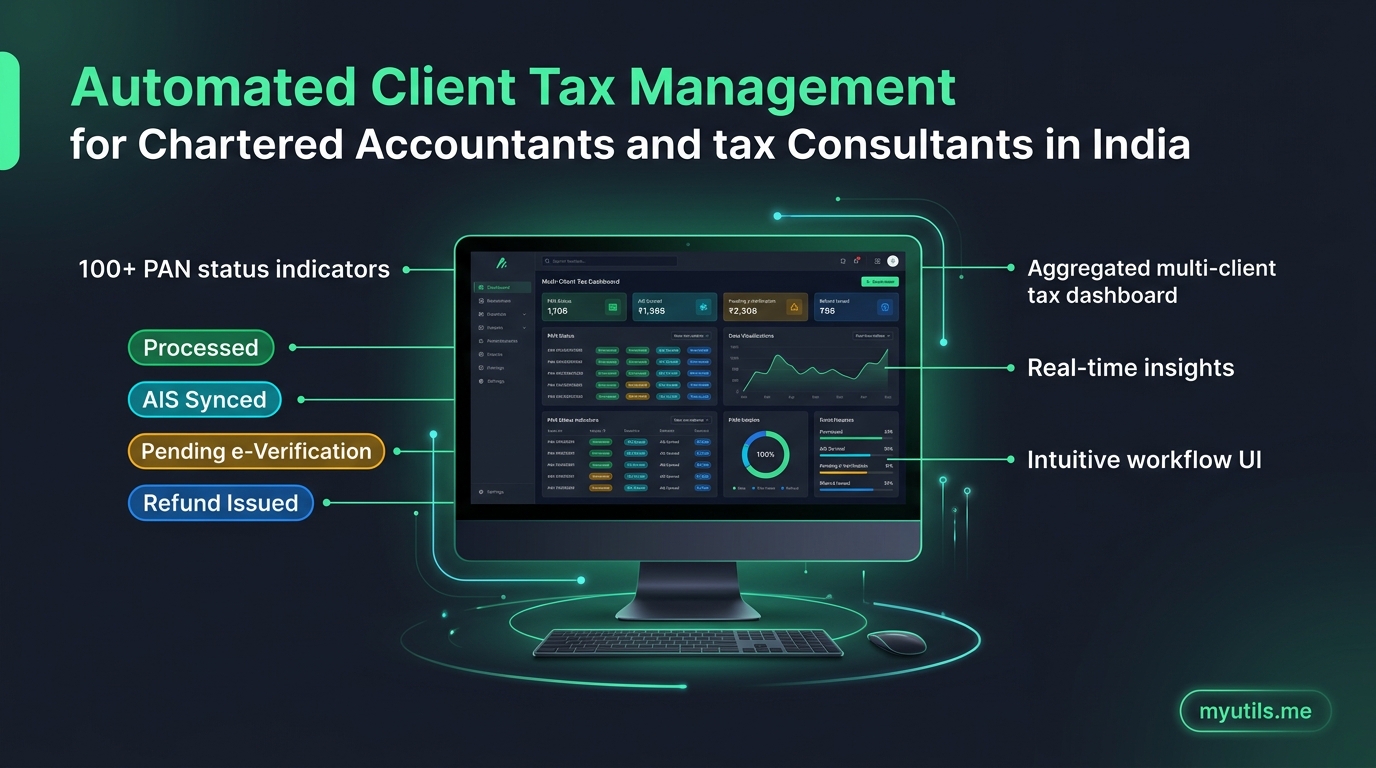
Tired of Logging into the Tax Portal for Every Single PAN?
Track all your client and family ITR refund statuses, intimation notices, and AIS summaries from one clean, automated dashboard.
The Penal Consequence: Sections 68, 69, 69A, and 69C
When high-value SFT transactions cannot be reconciled against your declared income or legal loans:
- Deemed Unexplained Income: The assessing officer can treat the transaction as unexplained investment u/s 69 or unexplained expenditure u/s 69C.
- Punitive Tax Rate u/s 115BBE: Unexplained investments are taxed at a confiscatory flat rate of 60%, plus a mandatory 25% surcharge, and 4% cess, totaling an effective tax rate of 78%.
- No Slabs or Deductions: Under Section 115BBE, no basic exemption threshold, business expense deduction, or loss set-off is permitted against unexplained income.
- Penalty u/s 271AAC: An additional penalty of 10% of tax payable can be levied if the addition is made during assessment.
| Statutory Tax Component | Legal Rate / Formula | Effective Levy on Unexplained Amount |
|---|---|---|
| Base Tax Rate | Flat rate under Section 115BBE | 60.0% |
| Surcharge | Mandatory 25% surcharge on base tax | 15.0% (25% of 60%) |
| Health & Education Cess | 4% cess on combined tax and surcharge | 3.0% (4% of 75%) |
| Total Effective Tax Rate | Total statutory tax liability | 78.0% |
| Penalty u/s 271AAC (if added) | Additional 10% penalty on tax payable | + 6.0% (Grand Total: **84.0%**) |

How to Stay 100% Notice-Free
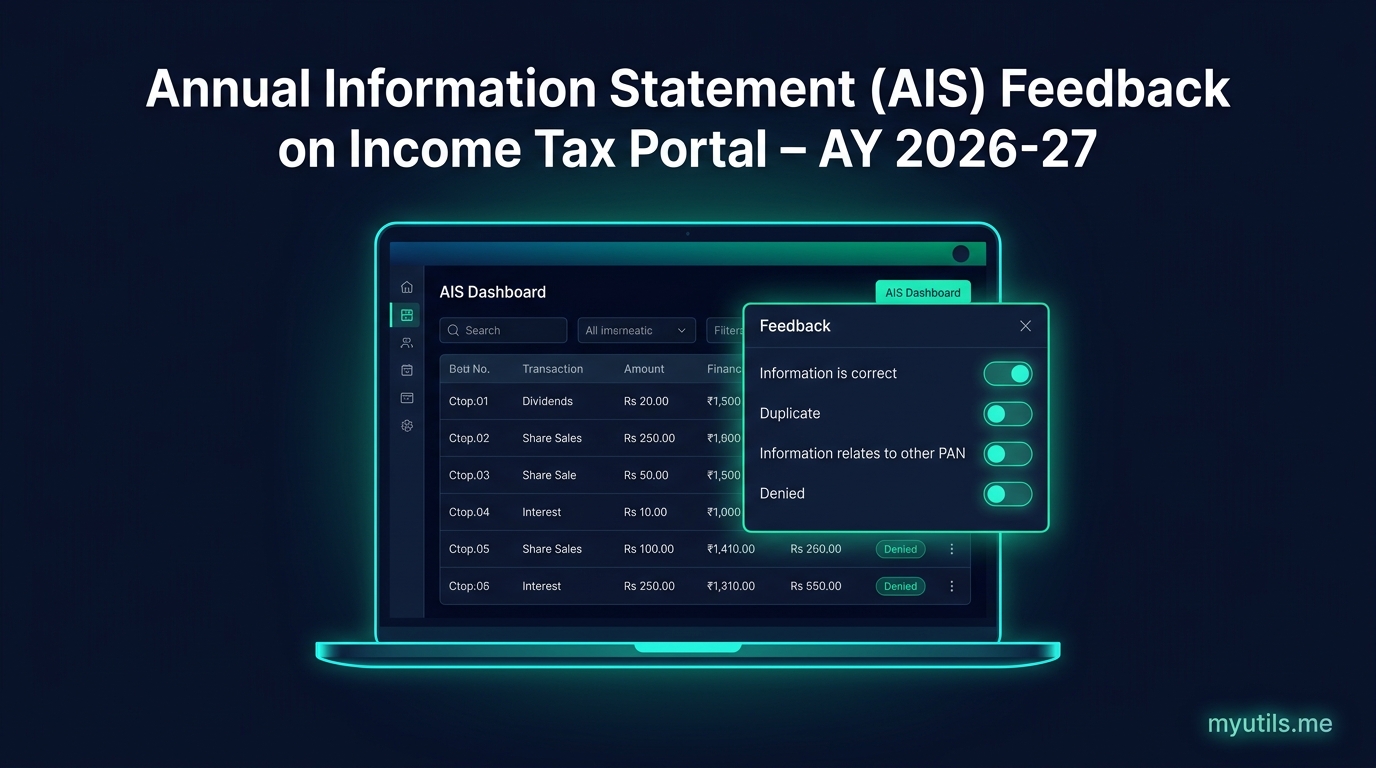
- Review Your AIS Before Filing: Every single SFT transaction reported by banks and institutions appears in Part B of your Annual Information Statement. Download your AIS and cross-verify that all investments are explained.
- Never Pay Credit Card Bills in Physical Cash: Settle card bills exclusively via your personal banking account where income has already been routed and taxed.
- Document Capital Sources in Advance: If purchasing property or making a ₹10 Lakh+ mutual fund allocation using family gifts, execute a formal Gift Deed under Section 56(2)(x) and ensure money travels via account payee cheque or RTGS.
- Automate Portfolio Reconciliation: For families, investors, and Chartered Accountants managing multiple entities, keeping track of SFT transactions across different banks is challenging. Automated dashboards like myutils.me aggregate AIS records across multiple PANs so you can proactively spot high-value flags before the tax department does.

myutils.me
Tax Compliance Research Team
Official editorial and compliance research team at myutils.me, building automated tools for income tax return tracking, AIS/TIS reconciliation, and direct tax workflows.